One thing you notice when researching historical fiction like “Eclipsed by Shadow” is how much human history is owed to the horse. Civilization advanced through adapting to the horse’s outlook.
 Horsemanship is a civilized encounter with an alien mind. Horses are a “prey” species whose code is: “he who quickly runs away, lives to run another day.” The horse is perpetually alert, suspicious and ready to flee, and 6000 years of domestication have not changed this basic instinct.
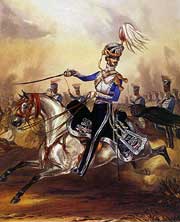
The horse is an unlikely creature to ride into the chaos of battle, yet no animal so conjures the image of war. Horsemanship is one of mankind’s oldest and most perfected technologies, and the battlefield was its testing ground for thousands of years. It would seem an impossible feat to ask a timid, flighty animal to carry men into a smoking, stinking cacophony of fire and noise—yet that is exactly the result needed, and produced.
The Book of Job in Bible has a passage which relates this paradox.
“Hast thou given the horse strength?
Hast thou clothed his neck with thunder?
Canst thou make him afraid as a grasshopper?”
Of course the horse is only an instrument; war is an invention of man. Strangely, the speed and physical strength of the animal made him a formidable weapon, but the great challenge of horsemanship through the ages was how to get this four-legged weapon onto the battlefield at all. Anyone who has seen a horse “shy” or bolt in terror from a blowing leaf will understand the achievement of enlisting cooperation from what is essentially a saddled rabbit.
Skittishness in horses varies between individuals and isn’t completely explainable, as with Saki’s famous “Brogue,” a horse so named “in recognition of the fact that, once acquired, it was extremely difficult to get rid of.” According to the author’s description: “Motors and cycles he treated with tolerant disregard, but pigs, wheelbarrows, piles of stones by the roadside, perambulators in a village street, gates painted too aggressively white, and sometimes, but not always, the newer kind of beehives, turned him aside from his tracks in vivid imitation of the zigzag course of forked lightning.”
The secret of man’s partnership with the horse is trust. A wild band of equines operates through friendships and roles, and with proper instruction the trained horse learns to place his rider in the leadership position. This trust must be earned through the process of schooling, and can easily be lost, but it is one of the miracles of riding that only through an exchange of trust can the incredible potential of a horse’s ability be unlocked.
