Show Jumping: A Dream Deferred

This is a rather random post. The subject has been on my mind, and this is a serious treatment. It doesn’t pertain directly to the Great Horse trilogy, but it is related, because the energy that led to writing was partly inspired by wonderful equestrian events like the American Invitational, which was cancelled this month–it was run in name only, a change hardly remarked upon by equestrian media, which struck me as inappropriate and also fitting.

May the event that put the “stadium” in Stadium Jumping return someday … and the dream be fulfilled.

_____________

I favor show jumping as a participant and spectator sport, and have long been interested in its success. The sport brings focus to the horse’s well-being and state of mind, and has potential to make horsemanship more widely available. Additionally, the sport allows spectators from all walks and stages of life to enjoy and connect with the horse, which can help preserve our beneficial and historic partnership in an increasingly technological era.

There’s been a recent wave of promising energy in the American show jumping scene … the Global Champions Tour debuted on US soil this spring in Miami, concluding a successful Winter Equestrian Festival. Bright young stars are using media attention to promote their sport. Recent news coverage has increased, and even the national sport’s top governing body has gotten into the spirit: USEF gearing up to grow horse sports

In pursuing these excellent goals, it is worthwhile to understand why the sport isn’t already more than a small asterisk in the consciousness of a sports-obsessed nation of former horsemen.

Not Ready for Prime-time … yet

The idea that making a show jumping event public is enough to achieve success may come from the fact that show jumping was briefly a mass-market spectator sport after WWII … but new efforts should not assume that show jumping is still ready for prime time. The whole spectator-based mentality of show jumping—its public-minded attitude and the “show” part of the sport—all went another way, and must be re-imagined and rekindled in order to renew a connection with the public.

The ready-for-primetime balloon was popped last fall. Social media buzzed about a new show jumping event in Central Park last October. Fresh energy and faces were bringing the sport to primetime—billed as the best chance in a generation for the sport to impress the public (and it probably was).

Channels were set and live-streams logged into … and then … well … it began. The presentation was like a pale hand emerging from the grave at the end of the movie “Carrie” to throttle public interest, just when things were sunny and good. Others may feel differently, especially knowledgeable viewers, but the wider audience wasn’t engaged.

Painted-on Flaws

I know this kind of show jumping production rather well. The brand is immediately recognizable: I was there when it happened. It’s not show jumping in the spectator sense, so much as a variant known to ward off the public: it has killed and will kill again if exposed to innocent spectator interest.

A healthy habit of self-analysis in the sport has been stymied by its history. This is not to cast blame: the only point is that anyone who wants to make the sport more popular will need to review recent thinking before bringing show jumping to television … or they will waste effort and money.

Stadium Jumping, Inc.

I have experience with another kind of success in horses. I started the first University Equestrian Club at UT/Austin, and in my senior year (1988) I created an event called the US Intercollegiate Show Jumping Championships which featured 9 teams from colleges across the country.

For the event I flew in the promising young David O’Connor (pre-Olympic medals and USEF Presidency) for the benefit of the competitors and to host a clinic. David acted as an official coach, and several colleges also brought their own coaches too. The Final was a Gambler’s choice-type competition that drew nearly 2500 spectators … something that never happened in Austin, Texas before or since. I obtained a front page “life-style” article in the Austin-American Statesman, and a mention on the Today show by weatherman Willard Scott (“Great weather for the Collegiate Show Jumping Championships!”).

Based on this event, I was hired by Gene Mische, founder of the now-venerable show jumping circuit, Stadium Jumping, Inc. I was flown to the National Horse Show in Madison Square Garden, in one of its last years at that location, and Gene asked about my ideas to increase crowd interest. He liked my ideas and hired me. Unfortunately the sport was about to shift in a direction that made such ideas obsolete for the duration.

Gene Mische – man with a vision

Everyone who knew Gene knows he was consummate gentleman and businessman … a wonderful horseman and spokesman for the sport. He loved the horse community and wanted to develop the sport in the public eye. Gene was genuinely committed to grow the spectator potential of show jumping, and worked to do so.

The backdrop of my hire was the upcoming World Cup Finals being held in Tampa. Gene felt the city was positioned to become more prominent location, and the World Cup was a part of his vision. An entire team was in place in Tampa months ahead, organizing the event and its corollary functions.

Gene had built up Stadium Jumping, Inc., into the preeminent American show jumping circuit and was taking the sport to new levels, with the clear goal of making it attractive to corporate sponsorship and growing the spectator appeal.

That is what Gene wanted to do, and I give him great credit and respect for his vision. How that vision relates to today requires acknowledgement of history–not for dwelling upon, but for understanding how to effect true and positive change.

Death of the big Charity Horse Show

By the 1970’s in America, a languid malaise seems to have fallen in many quarters, including the long-running big charity horse shows that had incubated the sport and its public connection.

The social element that was once a beneficial and sustaining resource became diluted through changing cultural tastes. Faced with challenges in attracting new volunteers and an increasingly non-horse literate population, the underlying groups began to move in a more centralized direction.

Other forces were at work. In the early 1980’s the traditional final individual event of a tournament, the Grandprix, gradually became the sole focus, and the rest of the week dwindled in attention. Among other reasons, the change was driven by exhaustion of volunteers—there are never enough angels—and because the ‘bottom line’ was immediately improved by cutting costs. Spectator losses were masked by increased single-day attendance.

Unfortunately the social/volunteer element was not as important—or supportable—with a Grandprix-only event, and gradually the traditional tournament concept and the volunteer charity concept were both diminished. Gene and his company, Stadium Jumping, Inc., were salvations to many of these shows, which were linked together in a Grandprix Circuit for sponsorship and spectator interest. There was early growth and excitement … and then the ground shifted.

Big charity horseshows are community affairs. Each was started to some degree through the generosity of patrons and a sizeable, knowledgeable, motivated and connected volunteer community. They found success through a spectator-tournament format, building excitement through a week of culminating social and spectator events.

Unfortunately, the cost-cutting measures that fuel corporate “efficiencies” combined with remote management had the effect of sterilizing the occasion. The corporate model proved difficult to sustain, for it undermined the very resources it needed: the community and local connections that made it all work.

1989 Show Jumping World Cup Finals

There was, for the World Cup, a title sponsor who suddenly threw in a dirty stop, you might say, by refusing to allow exposure to the European’s individual sponsors, which of course meant everyone pulled out, leaving Gene holding the bag. It seems the dark day was ‘rescued’ by interests with one condition: to get the sport out of the headlines. At the time, all I could see was my reason for being at Stadium Jumping seemed to have vanished.

The details don’t matter, only the effects on today. The change wasn’t necessarily to be permanent, but other factors enforced the direction. There were hints of a scandal involving some grandprix riders: the new stars of the new sport. The way it was handled—stonewalling and silence—proved damaging … not least because the scandal was never resolved from within and required federal action. In this long and frankly unjust period for many good professionals, the sport stagnated and many withdrew from public-based thinking. A bad habit was set.

Other organizers accelerated what became the mega-show trend. With a willing response from competitors, an exhibitor-based model was developed, a gigantism shorn of outsider interference and centralized to the extreme. The innovation of weeks-long village equestrian competition that Gene had pioneered actually did better when stripped of its spectator component. The event could go out to cheaper, empty land and create a horse playground with new amenities. The sport would be limited to those who could pay and spectators largely ignored.

The 70-horse fields, repetitive/rote information, workday enthusiasm, bland camera work, lack of explanation to the audience, avoidance of focus on horses, multiple horses per rider, long courses—all this was unfortunately part of the Exhibitor model as it developed, because spectators are frankly incidental. This isn’t to criticize but to recognize.

On the positive side, people enjoy the mega-show, and it has many benefits to the local economy and horse industry too. It allows more scope in some areas, and a pleasant and worthwhile experience for those able to join in. Hopefully this format has a very bright future, but it should be acknowledged that the Exhibitor model’s success is not in spectator attraction.

The work of making the modern spectator welcome and entertained is still to be done.

A new direction out of oblivion

The sport is still blessed with wonderful people, and of course, the spectator elements of the sport are not gone … if watching jumping were fun again, the crowds would return.

Horses are loved by the public … show jumping was created especially for spectators to watch horses. It is also a game, and games are what people most watch (not sports!). Show jumping could reach its potential as an educational and thrilling competitive adventure. Show jumping is a sport for the future. All this I still believe.

Horsemanship faces challenges in the modern age, which can be solved if horse enthusiasts find ways to come together and better share the experience of horses with the public. Show jumping can be an important tool for sharing.

Gene’s original vision didn’t happen exactly as planned, but there is reason to hope that the dream to successfully bring show jumping to the American public may have only been deferred.

Suffolk Downs … Preserving the Past and Welcoming the Future

The historic Suffolk Downs race track has announced it will no longer hold live racing, due to not getting a casino license. It seems the current gambling model has no future as manager/caretaker of American racing, but Suffolk Downs itself has great potential if it will focus on what it’s truly about … horses.

Suffolk Downs management has since said: “We’re willing to listen”.

_________________________

Suffolk Downs could move forward today as a horse-centered attraction to benefit the community of East Boston/Revere, as well as greater Boston and beyond. Huge potential exists for this sizeable, established, historic equestrian facility next to the Horse racing results board for Suffolk Downns track, East Boston, Massachusetts USA.	Photo: © Anthony92931 / Wikimedia / CC BY-SA 3.0international airport of an educated, affluent city with so few horse outlets and which thrives as a tourist destination. (Metro pop. 4.5 million)

Horse racing can continue at Suffolk Downs–additional uses of the unique facility can provide a revenue base. Suffolk Downs has a great deal of unused capacity: the property lies unused most of the year. Racing is held only half a day, three times a week for 5 months each year. Live racing could continue while expanding the facility’s usage to access revenue streams that have developed since Suffolk Downs racing heyday.

There are 6 potential legs to the profitability table:

I. Horse racing The first important revenue enhancement would be to promote the sport and Suffolk Downs to the broader public, something which has not been effectively done in several decades. It should be recognized that horse-players and enthusiasts are not necessarily the same as casino-clientele: horse gambling revenues are largely separate from casino profit.

Note: Opening the facility to a family focus could be done easily: the remaining area for gamblers is in the Clubhouse, set to one side of the larger, two-story open Grandstands (and open plaza) … it would be a simple act of signage to establish a soft division between a more intimate, adult, gambling-focused section, and a bigger and more family-oriented public area offering smaller ‘fun’ wagering. This would allow an appropriate space for families and also adult gamblers.

II. Other equestrian competition The facility is ready to conduct other major equestrian competition once it has developed arena space. Some 1200 stalls and related equestrian amenities exist on the 150+ acre property of Suffolk Downs … the stable block is adjacent to the mile-long main track, of which the entire infield of at least 100 acres is landscaped but otherwise unused. There is room for arenas and an International Grandprix ring (with existing seating for 15,000) AND a grassy picnic area for spectators … just five subway stops from the Waterfront at the heart of historical downtown Boston for exhibitors. The airport is less than 3 miles away.

III. Horse-themed retail/events Public-oriented horse events have discovered economic benefit through providing quality retail shopping areas … here is an ongoing horse event! Outdoor facilities at Suffolk Downs could be developed, and ample room also exists within the Grandstand buildings, side areas and numerous paved lots for permanent/semi-permanent spaces of equestrian-themed shopping. There is also existing space for conference rooms, exhibition areas, galleries–all contained in a unique and classic equestrian-themed setting.

IV. Corporate sponsorship There are greater possibilities for beneficial sponsorship in an inclusive public facility, including not only title sponsorship, but for educational horse-themed exhibits, volunteer/hospitality centers, pony rides, children’s play areas and other wholesome family-oriented facilities. The site can give exposure in a sport that literally invented the concept of sponsorship over 2000 years ago.

V. Donor Opportunities Humans have never been without horses before … our relationship is older than history. Today’s mechanized age has presented maybe the greatest crossroads the horse and human relationship has ever faced. Philanthropy is part of the ancient equestrian tradition, and there is opportunity now to sincerely contribute to humanity’s future by helping preserve horses for future generations. Suffolk Downs could offer an important way for donors to be remembered.

VI. Public partnership As our technological era continues and we face greater loss of connection with the natural world, our living historical link with horses will become more important–not less. Some limited governmental role seems appropriate to protect this investment for our future.

In return, Suffolk Downs could benefit area education as a partner in school field trips and various educational opportunities with horses. Lead-line rides and even beginner-level riding instruction could be made available through privately-run programs, with recommendations to local stables for interested students. There could be tie-ins with local art and museum interests and historical groups/events. 4-H, FFA and other youth programs, farrier schools, medical veterinary resources, equine therapy and other aspects of horsemanship could find a new home.

Moving forward

Variety and universality are strengths of horse activities today. Private investment by an individual interest is one path. It is also possible that a non-profit organization could manage the entire property to specific (and reportable) mission goals including attendance, business participation, revenue, tax allocations, public outreach, local community benefits, etc.

Activities and areas could be managed within this umbrella to create ‘free enterprise zones’ that allow for private business activity to achieve their own visions within a specific sphere … security and facility assurances (and a clear path to continuity) could foster a positive environment for investment and private initiative.

Suffolk Downs is a going concern—the property simply needs to be run effectively as an actual business. Permits and drainage and access issues have been worked out over the decades: the difficult work has been done. Suffolk Downs also has the advantage of a period of somnolence to spring from … a new initiative could creditably and truthfully be announced as an exciting new start.

Events have made it clear that Suffolk Downs must expand from a part-time, single-use equine facility with a focus on casino interests. If the property can be repositioned and refitted for a broad love of horses AND is focused on sharing it with the public … not only would the public respond, but Boston, the horse world and future generations would greatly benefit.

Suffolk Downs could be on the edge of a great and renewing historical adventure, preserving the past as it welcomes the future.

NYC could honor horses with small “Horse Village” in Central Park

The Legend of the Great Horse trilogy was inspired by man’s partnership with horses … the following is a response to an exceptional challenge to the horse’s place in society today.

Introduction

The NYC carriage horse situation has given me the idea to ask the horse welfare activists to help with a project for the future of horses—by helping reconnect the public with their equestrian roots.

A New Era

The recent move to ban horse carriages in NYC follows a number of controversies involving the place for horses in modern society. The struggle against horse slaughter, the fight to keep free-running mustangs in the American West, and, for me locally, the disbanding of the Boston police horses and detached dismanagement of Suffolk Downs—these issues point to a need for an informed public conversation about horsemanship’s role in the modern era.

This is a conversation for our time. The discussion couldn’t have been had in 1900 when cavalry competitions in Jumping were new and gaining unprecedented popularity with horse-experienced audiences. In the following decades the ‘horse and buggy’ was being replaced by automobiles and made into a cliché of being old-fashioned and obsolete. A conversation about the future of horses wouldn’t have been hopeful in the WWI & II years as 21 million US farm horses were summarily ‘retired’ in favor of tractors and horse cavalries were being disbanded the world over. Even as new recreational forms of horsemanship were growing in the post-war era, it was too soon to see whether popularity would sustain or how the new forms would develop.

Today we have the evidence that human interest in horses goes beyond their use in transportation and war, and valuable experience in how humane forms of horsemanship can continue to benefit mankind. We are at a historic crossroads and, as the challenges to the horse’s presence in society are showing, we need to have that conversation for the good of our horses and future generations.

My proposal is to ask Mayor de Blasio to set aside in perpetuity a quiet 1.5 acre plot in the 840-acre Central Park for a ‘Horse Village’ dedicated to sharing horses with the public.

Continue reading “NYC could honor horses with small “Horse Village” in Central Park”

Why Show Jumping?

By John Royce – My new project Clean-Round.com and many of my online shares are about Show Jumping rather than other horse sports I also love … I’d like to explain.

What some might call an unreasonable passion in my life has been to help connect people with horses in the modern era. My first love was Western and I believe there is no greater spectacle in sport than international Eventing’s cross-country. I respect Dressage’s empathetic quest for unity as both art and a hallowed touchstone of human progress. I enjoy watching Polo and see Driving as a moving homage to history and tradition. I love the races. It’s all good…

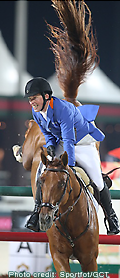
Gerco Schröder riding LONDON in the Gucci Grand Prix of Abu Dhabi - Photo: Sportfot/GCTThe reason I focus on show jumping is that it has three basic qualities that, in my view, give it the potential to connect an ‘un-horsed’ populace with its ancient legacy of horsemanship.
(1) As a necessary first condition, show jumping is humane and promotes higher standards in horse care, training and riding. Though not without issues, the official sport is zero-tolerance for drugs, abuse, or horse endangerment, including lameness or other pain. Beyond the rules, the challenge of jumping itself mitigates against bad treatment: horses do not jump well when afraid or uncomfortable. Bad behavior happens in any human endeavor, but in show jumping abuse is a path to injury and wasted investment—not success. The sport is beneficial to both horses and people, and inclines to the positive.

(2) The sport is amazingly adaptable to modern life. Though very young—the roots of horse jumping date only from the mid-18th Century—show jumping has now been contested all around the world on all kinds of surfaces, natural and artificial, from dirt lots to tanbark, snow, sand, and turf. The format is flexible and varied, with multiple levels of competition for all ages, both sexes and a wide accommodation of skill levels and economic backgrounds. It fits into spaces from small arenas to large stadiums, rural to urban, indoor and outdoor. The challenge of show jumping can be modified to meet a wide range of conditions and specifications.

(3)The third reason I share about show jumping is something rather unique in equestrian sport: it was conceived and created as a public spectator attraction. The sport was formed by accident, in response to spectator requests. Obstacles scattered across the countryside were brought in to include the audience—and something magical occurred. The spectacle became sport, and more than that, it became a game the horse understood and would play with us. People don’t watch sport so much as they watch games … and by being a game, when presented well, the sport can connect millions of people to the excitement and beauty of horses. Spectator interest has been integral to show jumping from its inception to its success today, and is a foundation which can be built upon.

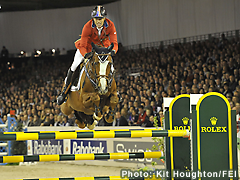
Rich Fellers (USA) riding Flexible winner of the Rolex FEI World Cup™ Final 2012. - Photo: Kit Houghton/FEIIt’s true the sport has had growing pains and problematic historical legacies and associations. Show jumping may not be quite ready for prime time in some ways: but it can be made ready, and along the way do a great deal of good for horses and (imo) greater humanity.

Humane benefits, flexibility to adapt to the modern era, and because spectator interest is intrinsically part of the sport–these are the reasons why I focus on sharing about Show Jumping!

Crossposted on Facebook