By John Royce – My new project Clean-Round.com and many of my online shares are about Show Jumping rather than other horse sports I also love … I’d like to explain.
What some might call an unreasonable passion in my life has been to help connect people with horses in the modern era. My first love was Western and I believe there is no greater spectacle in sport than international Eventing’s cross-country. I respect Dressage’s empathetic quest for unity as both art and a hallowed touchstone of human progress. I enjoy watching Polo and see Driving as a moving homage to history and tradition. I love the races. It’s all good…
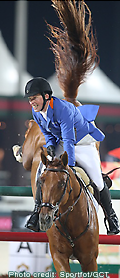 The reason I focus on show jumping is that it has three basic qualities that, in my view, give it the potential to connect an ‘un-horsed’ populace with its ancient legacy of horsemanship.
(1) As a necessary first condition, show jumping is humane and promotes higher standards in horse care, training and riding. Though not without issues, the official sport is zero-tolerance for drugs, abuse, or horse endangerment, including lameness or other pain. Beyond the rules, the challenge of jumping itself mitigates against bad treatment: horses do not jump well when afraid or uncomfortable. Bad behavior happens in any human endeavor, but in show jumping abuse is a path to injury and wasted investment—not success. The sport is beneficial to both horses and people, and inclines to the positive.
(2) The sport is amazingly adaptable to modern life. Though very young—the roots of horse jumping date only from the mid-18th Century—show jumping has now been contested all around the world on all kinds of surfaces, natural and artificial, from dirt lots to tanbark, snow, sand, and turf. The format is flexible and varied, with multiple levels of competition for all ages, both sexes and a wide accommodation of skill levels and economic backgrounds. It fits into spaces from small arenas to large stadiums, rural to urban, indoor and outdoor. The challenge of show jumping can be modified to meet a wide range of conditions and specifications.
(3)The third reason I share about show jumping is something rather unique in equestrian sport: it was conceived and created as a public spectator attraction. The sport was formed by accident, in response to spectator requests. Obstacles scattered across the countryside were brought in to include the audience—and something magical occurred. The spectacle became sport, and more than that, it became a game the horse understood and would play with us. People don’t watch sport so much as they watch games … and by being a game, when presented well, the sport can connect millions of people to the excitement and beauty of horses. Spectator interest has been integral to show jumping from its inception to its success today, and is a foundation which can be built upon.
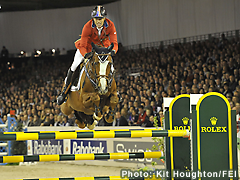 It’s true the sport has had growing pains and problematic historical legacies and associations. Show jumping may not be quite ready for prime time in some ways: but it can be made ready, and along the way do a great deal of good for horses and (imo) greater humanity.
Humane benefits, flexibility to adapt to the modern era, and because spectator interest is intrinsically part of the sport–these are the reasons why I focus on sharing about Show Jumping!
Crossposted on Facebook

In all directions Meagan saw multicolored forms, misshapen and sprawled, but her eyes would not focus, could not comprehend the thousand squirming remains of a massacre. Shapes of animals—both man and horse—lay crushed and struggling, or else staggered blindly across acres of death.
