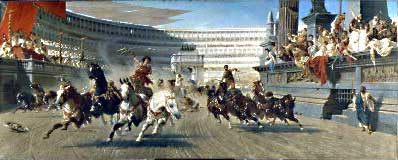
A city is gripped in mania: favored teams of pampered athletes from around the known world are meeting in no-holds-barred competition on the field of sport. Dignitaries and celebrities mingle with major sports figures as throngs chant the names of their favorites. Vast sums are wagered, details of the competition are endlessly debated. A deafening roar signals the start of competition, a scream punctuated with the crowd’s shrieks of pleasure and shock…
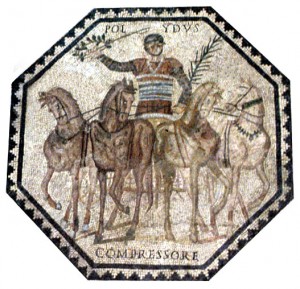
The scene is of antiquity’s sport of Roman chariot racing, the world’s first mass spectator sport, a spectacle that grew to shake the foundation of social custom and introduced a new kind of fanatic to the world. More than “mere” sport, the passions that chariot racing sparked were a discovery that changed civilization.
The frenzy of today’s mass media sports can be seen in primary colors in antiquity’s great “spectacle of horses.” The star celebrity status of athletes, cheering crowds, widespread coverage, gambling, grand venues and prizes—all the attendant glories of modern televised sport are striking echoes of what has gone before.
The top charioteers and horses were celebrated as iconic heroes: it was grumbled that Rome showed more grief over the loss of a favorite racing team than a military defeat in battle. The annual Circuit wound from Rome down the Italian peninsula and around the Mediterranean, with the best-known teams clashing at venues in Syracuse, Carthage, Alexandria, Constantinople, Antioch, Athens—bringing color and excitement to the drab lives of the imperial citizenry.
Emotions ran hot in the stands, with winning supporters rioting as losers wept and threw their clothing on the track to wander the streets in despair:
“… a people to whom one need only throw bread and give a spectacle of horses since they have no interest in anything else. When they enter a theatre or stadium they lose all consciousness of their former state and are not ashamed to say or do anything that occurs to them…. constantly leaping and raving and beating one another and using abominable language and often reviling even the gods themselves and flinging their clothing at the charioteers and sometimes even departing naked from the show. The malady continued throughout the city for several days”
~ Dio Chrysostom, c. 200 AD (Orationes, XXXII, LXXVII) describing fan behavior in Alexandria
What was this grandfather of modern televised sports insanity, how did it grow and what were the effects of the passions it released?
Next up: The Charioteers