The Paradox of Horses in War

One thing you notice when researching historical fiction like “Eclipsed by Shadow” is how much human history is owed to the horse. Civilization advanced through adapting to the horse’s outlook.
Horsemanship is a civilized encounter with an alien mind. Horses are a “prey” species whose code is: “he who quickly runs away, lives to run another day.” The horse is perpetually alert, suspicious and ready to flee, and 6000 years of domestication have not changed this basic instinct.

The horse is an unlikely creature to ride into the chaos of battle, yet no animal so conjures the image of war. Horsemanship is one of mankind’s oldest and most perfected technologies, and the battlefield was its testing ground for thousands of years. It would seem an impossible feat to ask a timid, flighty animal to carry men into a smoking, stinking cacophony of fire and noise—yet that is exactly the result needed, and produced.

The Book of Job in Bible has a passage which relates this paradox.

“Hast thou given the horse strength?
Hast thou clothed his neck with thunder?
Canst thou make him afraid as a grasshopper?”

Of course the horse is only an instrument; war is an invention of man. Strangely, the speed and physical strength of the animal made him a formidable weapon, but the great challenge of horsemanship through the ages was how to get this four-legged weapon onto the battlefield at all. Anyone who has seen a horse “shy” or bolt in terror from a blowing leaf will understand the achievement of enlisting cooperation from what is essentially a saddled rabbit.

Skittishness in horses varies between individuals and isn’t completely explainable, as with Saki’s famous “Brogue,” a horse so named “in recognition of the fact that, once acquired, it was extremely difficult to get rid of.” According to the author’s description: “Motors and cycles he treated with tolerant disregard, but pigs, wheelbarrows, piles of stones by the roadside, perambulators in a village street, gates painted too aggressively white, and sometimes, but not always, the newer kind of beehives, turned him aside from his tracks in vivid imitation of the zigzag course of forked lightning.”

The secret of man’s partnership with the horse is trust. A wild band of equines operates through friendships and roles, and with proper instruction the trained horse learns to place his rider in the leadership position. This trust must be earned through the process of schooling, and can easily be lost, but it is one of the miracles of riding that only through an exchange of trust can the incredible potential of a horse’s ability be unlocked.

Targa the Mongolian Warpony

Eclipsed by Shadow, is the first volume of the new trilogy adventure, “The Legend of the Great Horse,” which begins a journey that traces the history of horsemanship. In the story, the heroine, Meagan Roberts, is taken back through time by her horse, Promise. Meagan must survive humanity’s brutal past armed only with her knowledge of advanced horsemanship of the 21st century.

One of the interesting things about our relationship with horses is how slowly it developed. For many millennia mankind struggled with “conquering” the horse, when in reality simple humane treatment and empathy was the path to tapping into the equine potential. Today’s sensibly schooled horses could literally canter circles around primitive man’s poorly “broken” and brutalized mounts.

In the story, Meagan is dropped off in various time periods and must fend for herself. One such era is during Europe’s Dark or Middle Ages, when the enlightened horsemanship of Greek antiquity has been forgotten and brutality was again the norm of the day.

"Mongolian Steppe" by David Edwards | National Geographic
“Mongolian Steppe” by David Edwards | National Geographic

It was in this era that Mongolian nomads burst from their ancestral homes on the Asian plains to pillage and ransack from Russia to Poland, throughout India and the Middle East. Meagan lands amidst the united armies of Genghis Khan and is given a Mongolian warhorse mare she names Targa.

The mare is typical of her breed: stocky, short-legged and pony-sized. Meagan succeeds through empathizing with the mare and employing modern riding techniques that provide strong yet humane guidance. Their association grows into a real horse-rider partnership.

Targa illustrates how unchanged the horse’s nature is after many millennia of human “domestication.” Horses are simply too old a species to have become more than superficially adapted to mankind’s demands. Targa responds to Meagan’s enlightened empathy as horses do today; horses of primitive man would have done the same if given the opportunity.

The rampaging Mongolians cherished their horses, and their horses responded. This responsive cooperation with their riders led to wiping out alien societies, but there was no malice in the Mongolian warponies. Despite talk of the military “genius” of Genghis Khan, had Western society remembered their enlightened horsemanship instead of traveling down the path of war and brutality, they likely would not have been overrun by the superior skill of their Asian raiders.

There are many lessons in history, but one of the foremost is how spectacular are the results of empathy and harmony.

How Horsemanship Drove the Progress of Civilization

Our relationship with the horse predates literacy, but both tomb relics and modern records agree that most of history’s leading societies possessed the highest skill in horsemanship. Clearly there is more to a horse than meets the eye.

Equestrian skill was important for prowess in battle, and advantage could be attained by advances in horse care, riding, training, breeding, equipment, etc. The horse represented potential for producing enormous gains in productivity, and societies best at tapping that potential were the most successful.

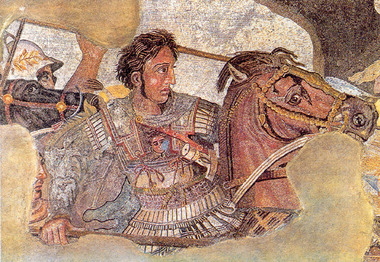
The Spanish Conquistador Cortez

One of the earliest civilizations, the Hittites, were a society known for their ability in building and using chariots, and grew to dominance in the 18th Century BC. Hittites were bested by Egyptians who used a new, lighter chariot design in the Battle of Kadesh in 1274, which was an epic Ancient World clash involving an estimated 5,000 chariots.

The Egyptians were eclipsed by the Greeks, and a superior philosophy of horsemanship may well have played a role. The Greek general Xenophon wrote On Horsemanship, the earliest surviving work on empathetic riding we now call dressage, which explains the humane method of schooling which produced their victorious cavalry.

Horsemanship fell to brutality in the Dark Ages, a symptom of a weakness the equine-centered Mongolian tribes under Genghis Khan were able to exploit as they overran Europe, India and the Middle East in the 13th century with huge armies of light horses.

Xenophon’s “On Horsemanship” was re-discovered in the 1400’s and helped ignite an interest in Classical thought which led to the Renaissance. 15th century Spaniards romanticized riding and treated it as an art form—a revolution of ideas from the brute servitude of Middle Age mounts—and their superior horsemanship was marked with triumph in the age of Conquistadors.

The 16th century Riding Master Pluvinel helped France take the lead in the equestrian arts with the development of the Haute Ecole, or High School of dressage, and the famous Airs Above the Ground. Today the contest continues in the form of international equestrian sport, where success still serves as a metaphor for a nation’s predominance.

The Long, Colorful Road of Horsemanship

The Legend of the Great Horse traces horsemanship from its earliest beginnings. The premise of the story is that Meagan, a horse-interested teenager of modern day, is whisked back in time to relive history … on horseback. As she travels in “jumps” from the earliest days of man’s association with horses, Meagan and the reader experience the changes in horsemanship that mirrored the advance of civilization.

A hallmark of skilled modern riding is that it looks “easy,” but it has not always been this way. The casual spectator watching well-groomed horses cantering a jumping field or half-passing down the centerline may be forgiven believing things such as “the horse is doing all the work” or “anyone could do it” etc. Riding looks easy when done well because the rider remains in balance with the horse, maintaining a fluid rhythm with the mount’s athletic motion. This is not how horsemanship has looked through most of history, and nothing we now take for granted about riding was obvious or simple for humans to discover.

The "Greek Seat"
The “Greek Seat”

The origins of horseback riding are lost in the mists of time, but using the horse to pull wagons, carts and chariots represented the first phase of practical horsemanship. Mounted horsemanship does not appear in clear view until antiquity, and after at least 3000 years of development it wasn’t terribly impressive. The horses were guided with nose-rings by a rider who sat far back toward the horse’s hindquarters, though the Greeks modified this by inching forward to sit on the middle of the horse’s back. It literally took the human race thousands of years to discover where, exactly, to properly sit on horseback.

To humans, horses possess an alien mind, and what seems obvious today was not “obvious” at all. As one example, stirrups were not invented until after the fall of the Roman Empire—which itself was more than 25,000 years from the days that prehistoric man’s preoccupation with the animal was shown by painting in caves. First came a “toe loop” which developed in India (c. 500BC) for the holding of the rider’s big toe. A few centuries later nomadic “Sarmatians” of southern Russia and the Balkans invented a single stirrup for use in mounting. Over the next half-millennium, Asia brought the stirrup to fruition; it was copied by Europeans and revolutionized war.

One might consider that our ancestors were not the most clever ponies in the stable, but the reason for the long period of development was that advanced horsemanship required changes in mankind’s thinking. As humanity grew sufficient empathy to discover advanced horsemanship, the modern world also began a rapid transformation into the modern age.