Here is a question whose answer may not be obvious: “Since we now have internal combustion engines, why bother with horses anymore?”
Horses have been mankind’s transportation, and yes, today cars have replaced horses on the interstates and parking lots. However there are more horses today than ever before, so it seems this affection is universal in the world. Does this affection matter, or is it nostalgic sentimentality only?
Horses play roles besides the one of passenger propulsion. Antiquity revered the horse as a symbol of power and prestige, an inspiration to artists and warriors, a respected teacher of youth and the partner of kings. The ancient world provided modern society’s foundation, so this is a significant world view. The upcoming Olympic Games in Asia this summer will provide an opportunity to view the modern revival of an ancient equestrian sports ceremony, which the media will cover badly or simply ignore as part of mankind’s ongoing loss of ancient knowledge. But beyond the ancient roles, what importance does the horse have in the 21st Century and beyond?
One can point to spiritual roles, as in the recreational or therapeutic aspects of horsemanship, or to the material roles where horse-keeping provides economic benefits both enormous and widely dispersed. More deeply, horses have helped build the fabric of our society. The rhythms of our lives and institutions move to the cadence of hoofbeats.
The commercial cycle remains horse-centric. Industries such as those of automobiles and television first consciously mimicked habits from our common history. Examples are how new “models” are introduced (born) each year, or how product obsolescence was planned to match a horse’s prime working life, some three or four years, followed by a longer serviceable period as a “used” commodity.
Belief that horses have been made obsolete by technology also forgets the central role of horses as teachers and human inspiration. Riding teaches leadership, and the results of its wide absence is well within view. Yet much of modern humanity has seemingly decided that now is the time to discard ancient wisdom and dismount the partnership that brought civilization to its current technological state. This is not, in my view, a good decision. The sanity of the “forgetful” human race may in some way depend upon simple horse-sense.
Equines are too ancient to have become domesticated by man’s last-minute meddling, and perhaps it is beneficial to humankind to have an unchanging partner entwined with our swaying societal structures. We may not need the horse for mass transportation (though it may yet) but we should not dismiss the value of modern horsemanship to our culture–not only for what is known and remembered, but for what is not.

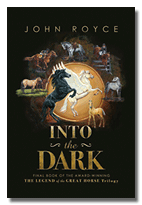
 Promise is the main character Meagan’s horse, born at the beginning of the trilogy as a palomino foal.