Show Jumping has a story to tell

I recently watched the live video feeds from two major international jumping events, The Syracuse Invitational and the Royal Winter Fair in Toronto. The horses look great, the riders are skilled, the competition level is high and humane. Both are well-run by innovative management.

The only lack was in the Announcing. Show jumping is like a storybook with pictures: it must be narrated. The story needs to be told.

Those who already love the sport will forgive transgressions against their spectator interests, but that is no reason for complacency. The key to creating new fans is engaging them.

Entertaining spectators at a horse show is as easy as talking to them about horses. This is not “easy” at all, in reality, as it requires talent combined with professionalism and love for horses and the sport. However, it would be pay great dividends for the sport to develop just such talent.

How Horsemanship Drove the Progress of Civilization

Our relationship with the horse predates literacy, but both tomb relics and modern records agree that most of history’s leading societies possessed the highest skill in horsemanship. Clearly there is more to a horse than meets the eye.

Equestrian skill was important for prowess in battle, and advantage could be attained by advances in horse care, riding, training, breeding, equipment, etc. The horse represented potential for producing enormous gains in productivity, and societies best at tapping that potential were the most successful.

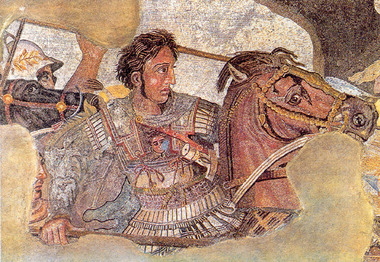
The Spanish Conquistador Cortez

One of the earliest civilizations, the Hittites, were a society known for their ability in building and using chariots, and grew to dominance in the 18th Century BC. Hittites were bested by Egyptians who used a new, lighter chariot design in the Battle of Kadesh in 1274, which was an epic Ancient World clash involving an estimated 5,000 chariots.

The Egyptians were eclipsed by the Greeks, and a superior philosophy of horsemanship may well have played a role. The Greek general Xenophon wrote On Horsemanship, the earliest surviving work on empathetic riding we now call dressage, which explains the humane method of schooling which produced their victorious cavalry.

Horsemanship fell to brutality in the Dark Ages, a symptom of a weakness the equine-centered Mongolian tribes under Genghis Khan were able to exploit as they overran Europe, India and the Middle East in the 13th century with huge armies of light horses.

Xenophon’s “On Horsemanship” was re-discovered in the 1400’s and helped ignite an interest in Classical thought which led to the Renaissance. 15th century Spaniards romanticized riding and treated it as an art form—a revolution of ideas from the brute servitude of Middle Age mounts—and their superior horsemanship was marked with triumph in the age of Conquistadors.

The 16th century Riding Master Pluvinel helped France take the lead in the equestrian arts with the development of the Haute Ecole, or High School of dressage, and the famous Airs Above the Ground. Today the contest continues in the form of international equestrian sport, where success still serves as a metaphor for a nation’s predominance.

“What’s a Dressage?”

It’s hard not to notice the disdain with which some sports watchers treat Dressage. They give silly quotes to media people that produce articles like: “Olympic dressage events leave Hong Kong’s horse racing fans yawning.”

Well of course they are yawning. You don’t get your Olympic thrills through eventing dressage, which is only more interesting than attractively-drying cement if it’s being done wrong. Olympic thrills are found on the next day, the Cross-County. Someone should have told the spectators, or at least the media. There is so much confusion in the world.

It is actually understandable that equestrian sports are such an oddity to the public, in spite of humanity’s millennia-old partnership with the animal. An uninitiated person would naturally assume modern equestrian sports have all existed since ancient times–in fact some of the most popular and exciting are hardly a century old.

It is an amazing bit of historical timing that an ancient skill like horsemanship was perfected to point it could conceive of athletic sports like 3-Day and Jumping … at the same time as the invention of automobiles. And today we have more horses than ever before.

Dressage, however, is truly as ancient as people assume all horseback riding is. It is a proven method of schooling horses that is at least 2500 years old. The origins were the battlefield, where discipline and athleticism were vital to cavalry success. Dressage is a gymnastics program for developing the horse’s physical abilities, and equally importantly, develops positive state of communication between the horse and rider. The system is utterly humane, to the degree of emphasizing only natural movements and requiring the horse be calm and relaxed at all times. Dressage is, in words of modern culture, the Jedi force that animates horsemanship. It is art, and there is magic in it.

Like all the arts, Dressage was lost with the decay of Western civilization during the Dark Ages. European Horsemanship disintegrated into barbarity as humanity lapsed into bestial conditions. The re-discovery of the ancient Classical art of Dressage was part of the earliest flowering of the Renaissance which sparked our current age.

There are multiple levels of dressage and as the levels go higher, the horse begins to develop more expressively until his gait becomes dancing. Some say dressage is like ballet, and as an educated art it is, though since dressage pre-dates ballet by over a millennium perhaps it is more accurate to say ballet is like dressage. (Dressage is also older than Classical music, that upstart.) The highest standard is the Grand Prix, exemplified in the competitive display of the Olympic Games. High level Dressage is a cultural event, as it was in the original Olympics themselves.

So that judge’s stand only looks like a bookie’s window, racing fans. I think the media gives too little credit to Hong Kong’s citizens. When Dressage is put to music at the final Freestyle, even racing fans may see the sparks which ignited during the Renaissance.
Horses & the Olympics

In writing Eclipsed by Shadow, I researched the history of the original Olympic Games and their relation to horses. The original Olympics were a religious ceremony, and were as much a poetry contest as a sporting event. The equestrian events were considered an athletic poem. They were a major focus of the original Games.

We have chosen to honor the “Olympics,” but there were actually four major Grecian Games, the Olympian, Pythian, Nemean, and Isthmian. These were held in yearly cycles, so that the largest Games near Olympia were held every four years. The equestrian events were the most popular and religiously significant. The contests included flat Racing, Dressage and Chariot Racing (today the sports are Dressage, Eventing and Jumping). Note that Dressage is the definition of “classical.”

The fact that the ancient Games were religious in nature has given a special moral character to the modern Olympic movement. There were two sports in the original Games: Athletics and Equestrian. Each type of competition held a specific meaning. Athletics represented the striving for human excellence, and Equestrian events represented man’s survival and conquest against the elements.

Inclusion of horses ennoble the Games, and the honorary aspect of equestrian sport is the origin of the famous “Olympic spirit.” The integrity of the Olympic ideal is upheld in the equestrian sport above all, for it is the horse which competes for no prize except the joy of taking part, and horsemanship which puts the mount’s welfare higher even than the Olympic rewards of money and fame.