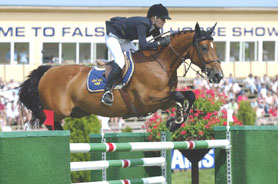
 Until the Los Angeles Olympics in 1984, the Nation’s Cup of Show Jumping was the final event held on the last day in the Main Stadium.
The ruling bodies of Olympic sport have currently placed the competition in the middle of the games. The Nations Cup is still of attention for several reasons.
Jumping is recent knowledge
Though equestrian sport is ancient, Jumping is a very young competition. After the first contests were held in the mid-1800’s, it was largely the military that fielded horses and riders–for the very good reason that the highest levels of horsemanship were practiced by cavalry. Jumping was a new challenge in horsemanship that highlighted the best military training.
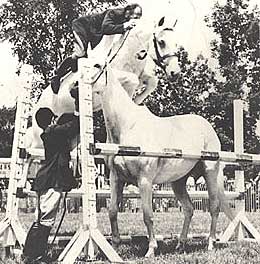 Officers came together to compete before the public in a team competition that became the Nations Cup. These international competitions originally were much as air shows today: advanced technology of the armed forces. Because cavalry quality often foretold success on the battlefield, there was special meaning attached to national success on the jumping field.
The Olympic Spirit Exemplified
The first formal Nations Cup was held at the Olympics in 1912, and were limited to commissioned military officers until 1952.
Before the Los Angeles Games in 1984, the Olympics concluded with the Nations Cup because it stood for the Olympic spirit of contest through sport and not conflict. The tradition was ended as commercialization took hold and the Closing Ceremonies became more elaborate.
The original meaning of the Nations Cup has not changed however. Horsemanship mirrors society, and the Nations Cup serves as an exciting measure of the spirit and economic strength of countries of the world.
The Nations Cup and Rise and Fall of Nations
 The placings of the Olympic Nations Cup recall the history of the 20th century. The top teams placings read like a who’s who of the world’s top nations rising and falling from the placings along with their economic and political strength.
The Nations Cup reflects the top of the world
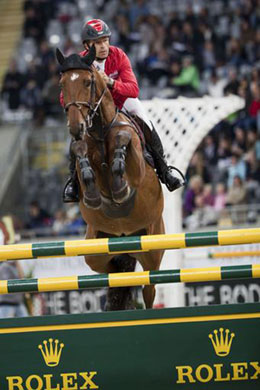 This year’s London Olympic Games are especially interesting as new nations come forward.
South American nations are showing competitive strength. Sweden is asserting itself. Australia is producing top talent. Japan is once more taking part. Eastern Europe is becoming steadily more competitive.
A big story is a new jumping rival in the Middle East, as nations like Saudi Arabia and the UAE have entered the world arena.
Even China and India, not equestrian nations in modern times, are making moves into the Jumping arena …
The Nations Cup has many surprises and excitement. One of the most traditionally important and telling Olympic competitons is set to begin …
 The European season of World Cup Show Jumping opened today in Oslo, Norway.
 Though horsemanship is ancient, Show Jumping itself is one of the world’s youngest professional sports!