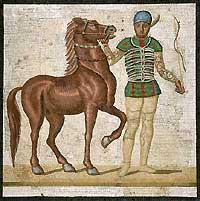
 In the year 100 A.D.
The Emperor’s chariots belonged to the Green corporation, and it was impossible to forget. Green banners flapped against squat mortar buildings and green ribbons adorned iron-grilled gates. Guards and supervisors wore leek-colored tunics and the horses worked in green-dyed wrappings and pads.
Inside the Emperor’s compound, stern horsemanship was executed with clockwork precision. Daylight hours were filled with the rumbling of chariots and shouts of men. First feeding was sharply at dawn and repeated at regular intervals throughout the day. Fresh water was supplied continuously and the stalls cleaned in rotation.
Horses helped Meagan through the dark days. The familiar rhythms of their care was an anchor to the world she had always known. Stall cleaning was her duty: slaves of better rank carried out feeding and grooming. The horses’ mangers were stuffed with fragrant hay and grains, but every morning a stained cart was wheeled down the rows, from which meat and eggs were distributed to mix with the feed. Romans believed feeding sparrow’s eggs, ground feathers and birds’ blood logically made a horse run faster.
“No, they do not,” Meagan had protested in broken Latin. “Horses are … are…”
“Horses are what?” asked a sneering voice behind her. She turned to see the baleful gaze of the Master of Horse. A waft of pungent perfume seeped from his toga. “Please, tell us. Horses are … what?”
“I-I don’t know,” Meagan said, flustered. She wanted to say “vegetarian” but could not think of the Latin word.
The man blinked up at her and wrinkled his nose. “Better not to offer opinions in the Emperor’s stable, I think. Others might find out we use idiots here.”
Meagan observed the other workers’ downcast eyes and remained silent. Later, she would learn the Master of Horse was called Posthumous, a name commonly given to a son born after his father’s death. Others’ descriptions of his character added colorful phrases to her vocabulary.
Excerpted from Eclipsed by Shadow, the award-winning 1st volume of “The Legend of the Great Horse” trilogy. (Hrdbk pg. 128)
Book II: The Golden Spark will be published soon.
Read the 1st Chapter online!
Copyright © 2008 John Royce
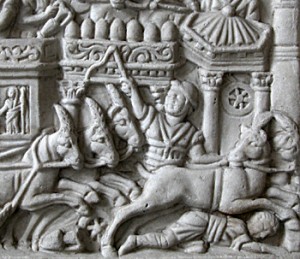 Naufragia was ultimate disaster, an end not only to hopes of victory but to lives, careers, destiny. A favorite champion could be undone in an instant—every moment of a chariot race was fraught with potential disaster. The extremes of emotion provoked by collisions and near disasters shocked spectators into wild states of euphoria and despair.
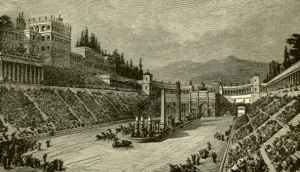 In our modern society we have celebrity athletes of different sports, but this is not simply a continuation of historical tradition. Rome was the society that first grew athlete-superstars was Rome. After their collapse, Europe endured a period of centuries known as the Dark or Middle Ages in which there were no celebrity athletes. It was not until the Industrial Age and the organization of modern sports that athletes began to again capture the popular imagination as celebrated stars.
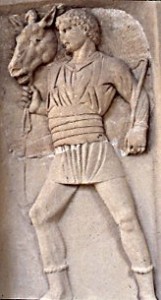 Unpredictable new things have occurred in society, or at least have emerged in forms unrecognizable to that which has gone before. Such is the case of the charioteer in Ancient Rome.
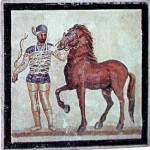 For their part, charioteers gradually developed an impunity to societal laws and accepted conduct. The profession became synonymous with thuggery, cheating, bribery and other “low” behavior, to the point Emperor Nero “forbade the revels of the charioteers, who had long assumed a license to stroll about, and established for themselves a kind of prescriptive right to cheat and thieve, making a jest of it.” [Suetonius,