The First Horse …

Every horse in the world can be traced to a single mare that trotted the earth about 130,000 to 160,000 years ago, according to findings reported by Bloomberg News as published by US National Academy of Sciences.

The Cave Mare from "Eclipsed by Shadow"Ancestral Mother of All Horses Galloped 160,000 Years Ago

Today’s horses are descended from one ancestral mare according to findings reported by Bloomberg News as published by US National Academy of Sciences.

Every horse in the world can be traced to a single mare that trotted the earth about 130,000 to 160,000 years ago, scientists discovered for the first time.

The research identified 18 different genetic clusters that arose from the ancestral mare, suggesting that domestication occurred in many places across Europe and Asia, according to work published today in the Proceedings of the National Academy of Sciences.

The Academy’s proceedings did not immediately confirm whether the Ancestral Mare was the original Great Horse as detailed in the nearly-eponymous trilogy of same … or whether this discovery offers new proof of the story’s mysterious legend.
_____________

Related Link:

» All modern horses trace back to single ancestor

New interactive Page for Book I: Eclipsed by Shadow

Eclipsed by Shadow - Join us on Facebook!

A new fan-oriented Facebook Page will allow community sharing and posting on the Wall.

Additional pages will be set up for the other books of the trilogy.

The Golden Spark (Book #2)’s Page will be opened soon with the release of the title in ebook … to be followed by Into the Dark when the paperback edition is issued in October.

The official page for the The Legend of the Great Horse trilogy is reserved for book announcements and author posts … now there’s a way to interact directly and accept posts/shares from fans of the series!

10 Myths about Equestrian (horse) sports

Well yes, the horse does do all the work of transporting the human and itself … however that is only half the equation. Equestrian sport is an extreme sport on the human side, requiring skill, nerve, balance and timing that can be invisible to the observer.

A horse wearing glassesThe recent Olympics offered up excitement and inspiration … and revealed that much of the public does not understand one of the founding events: equestrian sports.

Horses challenge humans to look beyond surface appearances. Here are some examples of common misconceptions about horses and their sports:

1) The horse does all the work.

Well yes, the horse does do all the work of transporting the human and itself … however that is only half the equation. Equestrian sport is an extreme sport on the human side, requiring skill, nerve, balance and timing that can be invisible to the observer.

Most would never assume a pole vaulter was not an athlete because the pole did the actual lifting work. There are two athletes competing together in equestrian sport. The horse provides the living propulsion; the rider’s job is staying with the motion and directing: a different but not lesser challenge.

2) Horse riding is for rich people

Again we have a semi-truth that covers part of the picture. OWNERSHIP of top equine athletes is, yes, for rich people (or corporate sponsors). However ownership is separate from the actual competitive challenge. Top riders do not necessarily or even usually own the horses they ride in competition.

Riding is a professional sport requiring full time training and competition. Naturally the top riders are highly sought-after to pilot the top horses … in this way talented riders can come from any background if they have the ability. Many top riders are from very modest backgrounds and work their way into the higher levels, and that number is increasing.

3) Equestrian sports are cruel

Human history records much cruelty to horses in the past: war was cruel, ‘breaking’ horses and other mistreatment can be abusive … and these images stay with us. However, equestrian sport competitions are not won through cruelty–in fact the animals must be sound, attentive and willing, all of which abuse destroys.

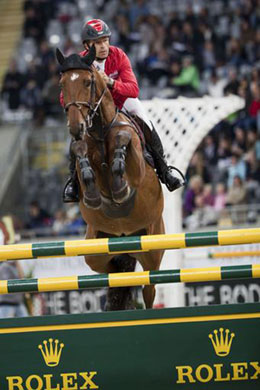
The nature of horses is one of action and spirit, something quite different than other domestic animals we may be more familiar with. The feats of which horses are capable are superhuman–that is the point actually—but they are natural for the horse. Evidence that equestrian sport is not cruel or abusive can be found in the fact top competitive horses stay in the sport for many years. For example, a top horse in the London Games, Lenamore,  competed successfully at the age of 19.

Equestrian sports are also ‘no-tolerance’ for drug usage, and any sign of lameness is impermissible. The ‘scandals’ by media should be read more closely.

4) The horse is ‘forced’ to compete

It is a fallacy to assume you can ‘force’ a horse to do something he/she does not want to do. They are large prey animals, much bigger than humans, and are quite capable of saying ‘no’ … much of successful equestrian sport is determined by the horse’s mood and mental acceptance of the task to perform well. Forced performance is a failed performance.

It is true that the horses in equestrian sport have been asked to extend themselves athletically … part of the inspiring nature of horses is that they will respond and give of themselves if asked. This generous aspect of horses is honored in equestrian sport.

Also, people should understand that horses have always been a working animal. They are not pets, but very special partners of mankind. Their care and maintenance are expensive, but horses earn their keep and are worthy of respect and admiration.

5) Equestrian sports are unpopular

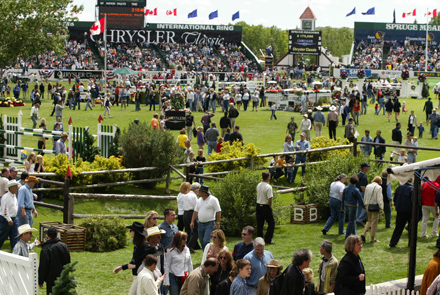
Actually though modern horse sports are quite popular and growing. Equestrian is one of the most well-attended attractions of the Olympic Games. Every Olympic equestrian event in London sold out immediately. The different sports attract millions of spectators across the globe.

The fact that horse sports are comparatively unknown is a function of the newness of the sports in the modern era, not because they are unpopular. Where horse sports are established and promoted to the public, competitions attract crowds similar to other major spectator sports.

6) Horse sports are ‘old-fashioned’ and declining

Actually horse sports are rapidly growing, and the ability to jump high is a very new discovery in horsemanship. Though some equestrian sports are ancient and obsolete, such as chariot racing and jousting (which is making a comeback though!), modern sports have taken their place and are bringing horses to new generations.

Perhaps the sense of decline comes from the recent ending of the horse’s role as mass transportation. The past century saw a huge change in horsemanship as the world’s cavalries were disbanded and actual horsepower was replaced by tractors and automobiles. Fortunately, intriguingly, at the same time new horse sports began to become popular and are still growing today.

7) Only a few nations compete

This claim was true in the first part of the 20th century when modern equestrian sports were being organized, but now the rest of the world has discovered them. Europe was the birthplace for many modern horse sports and is still its center, but virtually all nations have a historical tradition of horsemanship and the sports have spread worldwide.

The world equestrian body, the FEI, lists over 140 member nations … 49 countries competed in the London Olympic Games, from a competitive field in which many more did not qualify. Horse sports thrive in the Americas, Australia, Europe and South Africa, and recently the sport has taken hold in the Middle East and is gaining interest in India and Asia.

8) Horse sports are ‘easy’ … you just sit there.

Actually you ‘stand’ on the horse for most competitive sports; the form is similar to a skier’s position and has similar demands. The additional test is the unpredictability of the horse in motion.

In riding it is important to move with the horse and keep distracting motion to a minimum for the sake of the animal’s focus and balance: the appearance of sitting and doing nothing is actually indication of good riding, not ease.

9) The Olympics are for human athletes

The original Olympics were ½ horse show, ½ track meet (and poetry contest). The Games were never only about human excellence: instead they were about finding favor with Creation and celebrating man’s survival in nature through harmony. One could observe that, of all the forgotten events and athletic competitions in history, the Olympics thrive today and certainly benefit by equestrian inclusion.

10) Horse could do better w/out riders

It is the union of horse and human that produces the performances seen. Though obviously the human cannot win  a race or contest a big jumping course on foot–it is less obvious that the horse needs the human direction and assistance.

Using jumping as one example, equine vision is almost 360 degrees (a horse’s eyes are on side of its head) but the animal has limited depth perception: it is human guidance and balancing that allows the athletic performance over large obstacles. Other horse sports are a similar mix of human and horse cooperation: one of the amazing, symbolic aspects of horsemanship is that horses and riders together can do what neither can do alone.

Support humane equestrian sport and you support horses

Horses have chosen to be our partners, and have helped mankind build civilization. Today horses have the chance for a much better life and relationship with people through recreation and sport. This new day in horsemanship deserves support and acceptance, for it is helping fulfill the potential of our joy with horses, well cared for and honored.

Olympic Show Jumping’s Team Competition: The Nations Cup

Horsemanship mirrors society, and show jumping’s Olympic Nations Cup still serves to measure of the spirit and strength of the countries of the world.

Until the Los Angeles Olympics in 1984, the Nation’s Cup of Show Jumping was the final event held on the last day in the Main Stadium.

The ruling bodies of Olympic sport have currently placed the competition in the middle of the games. The Nations Cup is still of attention for several reasons.

Jumping is recent knowledge

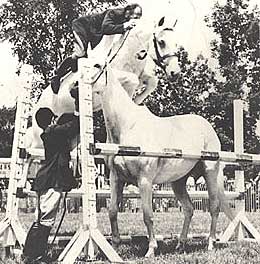
Though equestrian sport is ancient, Jumping is a very young competition. After the first contests were held in the mid-1800’s, it was largely the military that fielded horses and riders–for the very good reason that the highest levels of horsemanship were practiced by cavalry. Jumping was a new challenge in horsemanship that highlighted the best military training.

Officers came together to compete before the public in a team competition that became the Nations Cup. These international competitions originally were much as air shows today: advanced technology of the armed forces. Because cavalry quality often foretold success on the battlefield, there was special meaning attached to national success on the jumping field.

The Olympic Spirit Exemplified

The first formal Nations Cup was held at the Olympics in 1912, and were limited to commissioned military officers until 1952.

Before the Los Angeles Games in 1984, the Olympics concluded with the Nations Cup because it stood for the Olympic spirit of contest through sport and not conflict. The tradition was ended as commercialization took hold and the Closing Ceremonies became more elaborate.

The original meaning of the Nations Cup has not changed however. Horsemanship mirrors society, and the Nations Cup serves as an exciting measure of the spirit and economic strength of countries of the world.

The Nations Cup and Rise and Fall of Nations

Olympic ringsThe placings of the Olympic Nations Cup recall the history of the 20th century. The top teams placings read like a who’s who of the world’s top nations rising and falling from the placings along with their economic and political strength.

The Nations Cup reflects the top of the world

This year’s London Olympic Games are especially interesting as new nations come forward.

South American nations are showing competitive strength. Sweden is asserting itself. Australia is producing top talent. Japan is once more taking part. Eastern Europe is becoming steadily more competitive.

A big story is a new jumping rival in the Middle East, as nations like Saudi Arabia and the UAE have entered the world arena.

Even China and India, not equestrian nations in modern times, are making moves into the Jumping arena …

The Nations Cup has many surprises and excitement. One of the most traditionally important and telling Olympic competitons is set to begin …

Why Horses are part of the Olympics

The 2012 Games of the Olympiad usher in a new four-year cycle, the ancient ritual of our Greek ancestors. After 2700 years horsemanship is still contested in the revival of the Games. Some may wonder why we have horse sports in the Olympics … the answer may surprise you…

The Olympics are coming and I’m seeing equestrian write-ups in media … it’s inspired me to put together some thoughts about the history of equestrian sports and their meaning in the Olympic Games. —  J. Royce
__________________

Olympic ringsThe 2012 Games of the Olympiad usher in a new four-year cycle, the ancient ritual of our Greek ancestors. After 2700 years horsemanship is still contested in the revival of the Games. Some may wonder why we have horse sports in the Olympics … the answer may surprise you.

The Ancient Greeks

Western civilization began with the idea of the ancient Greeks to find a new way forward, by seeking harmony with nature through reason. As brief as this society was (before again succumbing to war), their moment of artistic creation brought an explosion of discovery—theater, geometry, philosophy, astronomy, democracy, medicine, even the empathetic horsemanship we call dressage—which gave inspiration to a new kind of living as men and not beasts.

This spark, interrupted and corrupted and renewed, has grown to spread throughout the world. The society we live in is the living expression of these ancient ideals.

The original purpose of the Olympics

The original Games began as an effort in unity, to honor mankind’s impulse for striving without the disaster of actual conflict. This was a reaction to just such disaster: at the time of the original creation of the Games (c. 760 BC), the Greeks were recovering from the destruction of their society in an 500-year Greek Dark Age.

No culture in history has revered the horse more than ancient Greek society, and horsemanship of the time was a warrior’s skill. So when our ancestors of Western Civilization established a celebration of martial skills in a new spirit of contest, the transformation of the horse from war engine to artistic, athletic partnership was a clear symbol of the promotion of harmony and peace … upon which it was believed the gods themselves smiled.

Equestrian sports symbolize the spirit of a people

Equestrian sports exercised what the Greeks considered the virtues of man, not only wisdom but Aristotle’s 8 moral virtues: prudence, justice, fortitude, courage, liberality, magnificence, magnanimity, temperance. Horsemanship represents reason taming chaos: moral man is granted the crowning seat of nature the brute could never attain.

The celebration of the horse’s athletic partnership with mankind also memorialized the idea of the horse as a gift from Creation. For the ancients, the spectacle of equestrian sport offered proof of the gods’ approval of mankind’s place as leader of the natural world.

The tradition continues

Time has proven the success of the ideals that sparked Western civilization. When mankind has remembered the path of cooperation and humility before Creation, society has unfolded amazing wonders of peace and prosperity. A symbol of this path is today as it was from the beginning: the harmonious union of horse and man, able to achieve together more than could be accomplished apart.

Our remembering of this union, our renewed celebration through equestrian sport, does more than recall the ages past … it ennobles us in the ancient tradition of cooperation and harmony that made the success of civilization possible.

Related Links

» Daily schedule of the Ancient Olympics

» History of the Olympic Games

» The Dark Age of Ancient Greece

» Before the Greek Dark Age

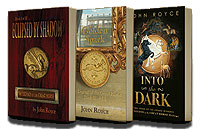
Publication of Book III: Into the Dark

Into the Dark ($19.95, hardback) is just out today, and is currently available through major retailers (by ordering) or through online booksellers …

Book III: Into the Dark | The Legend of the Great Horse trilogy (bookcover)

Here’s the new bookcover for Book III: Into the Dark!

Each of the original ‘Great Horse’ characters were created by artist Marti Adrian, and are placed around the central figure to correspond to the story’s chronology. The text layout was created by Carolynne Smith of Pixelgraphix. Cool, huh!

Into the Dark ($19.95, hardback) is just out today, and is currently available through major retailers (by ordering) or through online booksellers … the major ones being:

Amazon has a delay listed for shipping … the book shows full availability on Barnes & Noble.

The Great Horse, Rafi

The Great Horse, Rafi “Meagan found herself growing angry; no one seemed to know how to care for the animal properly. She wanted to brush the horse’s unkempt coat, to oil his cracked hooves. Her eyes fell to a plaque. It was a metal sign with raised letters, fixed to a podium before the plexiglass stage…” – Into the Dark (excerpt)

 Into the dark cover image

The Legend of the Great Horse trilogy is an adventure through history―on horseback. Into the Dark (Book #3 of the Legend of the Great Horse trilogy) was honored as a Bookwatch Selection for Young Adult Fantasy.

In this excerpt, Meagan has stumbled into a strange, horseless world …

“God forbid I should go to a Heaven where there are no horses.”

—R.B. Cunningham-Graham (1852-1936)
‘Rafi’ from Into the Dark by John Royce - Artwork by Marti Adrian | (c) 2012 Micron Press

Meagan ignored the speech around her as she moved through the audience. She could see the top of a clear plexiglass wall above the heads of the crowd, but it wasn’t until moving closer that she saw it encircled a platform of artificial turf—upon which stood a living horse.

“Look!” hooted a spectator. “How would you like to clean up after that, honey?”

“I want to pet it!”

“No dear. It’s cruel to them.”

The manure had not been cleaned from underneath the horse, and there were no water buckets or haynets visible. The animal’s smooth gray coat had lumps of scurf from poor grooming and his halter was fitted too tight. Meagan recognized the horse’s Arabian breed by the dished profile of his diamond head and the long tail which draped from his level croup. The animal’s muzzle narrowed to a mouth that could almost “fit in a teacup.” Dark, expressive eyes turned their faraway gaze to Meagan. The Great Horse, Rafi.

The gray stallion was held between handlers in upbeat yellow shirts, standing before a small crowd of helpers wearing matching green Animal Hero t-shirts. Meagan found herself growing angry; no one seemed to know how to care for the animal properly. She wanted to brush the horse’s unkempt coat, to oil his cracked hooves.

Her eyes fell to a plaque. It was a metal sign with raised letters, fixed to a podium before the plexiglass stage…

__________

Quick Links: