China drafts first-ever animal protection laws

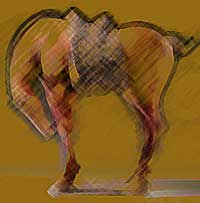
china_tang_horse-biting-legI found this to be a topic with some ugly background, but here’s good news … if it happens:

The legislation, drawn up in consultation with the RSPCA, will include provisions to both protect pets and cover how farm animals should be raised, transported and slaughtered. It will also deliver protection for captive wildlife and laboratory animals.

Past efforts to promote animal protection legislation in China have met with steady failure. Possibly, hopefully, this action will lead to a step forward. No great leap requested. We’ll see.

Further reading: “Chinese Animal Protection Law and Other Matters”

Helsinki International Horse Show

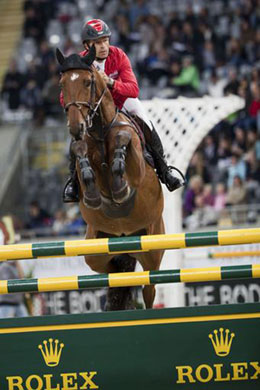
FEI_WC10_Oslo_Pius-SchwizerThe second European qualifier for the World Cup of Show Jumping was held over the weekend in Helsinki, Finland.

The on-fire Swiss rider Daniel Etter and his mount Peu a Peu won the event in a 10-horse jumpoff to match their World Cup Qualifier victory last weekend in Oslo. USA rider Lauren Hough on Quick Study took second only 1.08 seconds behind the leader, the best result for a US rider in this early season.

European World Cup Jumping is an exciting indoor series because of the large public crowds and media attention. Show jumping was originally developed in Europe and still leads the world in spectators and dynamic, innovative presentation of the sport.

World Cup Show Jumping: European League Opens in Norway

Meredith_Michaels_Beerbaum__ShutterflyThe European season of World Cup Show Jumping opened today in Oslo, Norway.

The World Cup is an extensive series of indoor qualifiers across the globe, leading to the Finals in April.

It is an interesting odd fact that horse jumping is a  young sport: the ability of horses to jump with a rider was not discovered until the 1700’s. This intriguing competition continues to grow in popularity worldwide. The Show Jumping World Cup series was only begun in 1978, and today the series is contested in 14 leagues on every continent.

In essence, Show Jumping’s World Cup is the sport’s annual international indoor championship. Since the 1950’s, Show Jumping has evolved into a year-round sport, and the tight, colorful, electric atmosphere of indoor jumping is very different than the galloping expanses of outdoor courses. Some horses go better indoors, some prefer outside–this difference in challenge makes for interesting jumping competition year-round.

On the Trail of History

If history may be said to be the memory of the human race, it seems subject to many of the same failings of accuracy and interpretation. We see this even in our most recent history: for example a national self-image embraced bytrail-of-history some which holds America to be a militaristic warrior-race which “won” WWII, rather than the gentler truth that we were beloved as the good guys who did not continue war-making but instead helped rebuild Europe.

If even recent incidents can be mis-interpreted (or mal-interpreted), can events further in the past can be accurate and valuable?

An answer is in corroborative evidence that points to explanation, such as archaeological remains that support period documentation. Art is a hugely valuable window into the heart of a culture. Diaries, journals, new items, accounting records—there are many forms of documentation that can lend credence to historical truth.

Without honest inquiry none of this matters but, even with this impulse, how can one find relevance to our own experience? Is it relevant, say, that as our Roman forebears grew prosperous, a merchant class rose that militarized the culture, formed corporations to buy up land in Italy and dispossessed the working class farmers, replacing the food crops with vineyards which led to starvation and the grain dole and the creation of the infamous masses?

These things happened … do they matter today? If so, how to talk of this in a corporate world with a focus that leaves such history uncovered? Is it necessary to careen from disaster to disaster as humanity has done for millennia, or can we use history to connect the dots and create a better world for all of us?

Equine Benefits: Riding horses is therapeutic and educational

I recently read an inspirational story about an occupational therapist teaching South African street children to ride horses.

The horse has had many roles in our society, some of which have been replaced by technology (eg., transportation, war, food) … however some of the horse’s most important roles in human lives remain vital. Horses are wonderful therapy, as many riders know, and are effective in both intensive rehabilitation and simple therapeutic recreation.

It is exciting to see the spread of horsemanship happening in our technological age, and it signals a recognition that our relationship with our longtime partner is still valued and valuable: a recognition that would seem to credit not only the horses, but also us humans.

The Nashville News: “A delightful read for history buffs and horse fans alike”

This engaging book will especially appeal to young adult readers and educators. The story combines fast-paced adventure with accurate information about horsemanship and the various historical periods explored.—Mary Barrett, The Nashville News

March 2, 2009 | The following is a new review of Eclipsed by Shadow by Mary Barrett (“Let’s Read”) appearing in The Nashville News:

Mary Barrett | Let’s Read!

This book brings to life man’s fascinating partnership with the horse. Teenage and adult readers will thrill to this remarkable story featuring the horse’s role in history. Readers become part of the adventure as they travel back to the days when primitive man stalked horses as prey, and witness the development of horsemanship in ancient and medieval cultures. This engaging book will especially appeal to young adult readers and educators. The story combines fast-paced adventure with accurate information about horsemanship and the various historical periods explored.

This is a delightful read for history buffs and horse fans alike. The second book will be The Golden Spark. Eclipsed by Shadow won the Eric Hoffer Award for Young Adults and placed 2nd in the 2008 Reader Views Literary Awards for Fantasy.

Eclipsed by Shadow can be found at your local bookstore, by using the website TheGreatHorse.com or through online booksellers like Amazon.com.

graphic image of knight chesspiece

Eclipsed by Shadow is the first book of the award-winning fiction trilogy, The Legend of the Great Horse, a journey through history–on horseback! The story follows the time-travel adventure of a modern horsewoman lost in the distant past.

Further information about this unique and imaginative ‘creative non-fiction’ novel can be found at TheGreatHorse.com.

History as an afterthought

History is an inexact science to be sure, relying at least partially on hearsay and filtered through the political whims of its era. History is also old in the physical sense of the word, an unattractive quality to some.

But the past isn’t dead. As William Faulkner said, “it isn’t even past.”
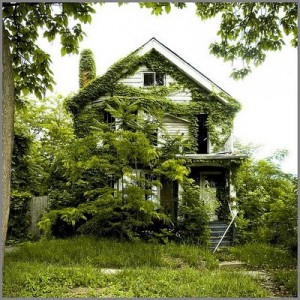
feral-houseYes, the actors are gone, places have closed or vanished. Attitudes and beliefs have also changed … but it is this sort of mental change that is the value of knowing history: to discover what fails, and what succeeds.

A society’s shared knowledge of history can be compared to a person’s memories. It would be a tragedy for an adult to lose the lessons of youth, to forget what happens when your hand meets a hot stove or a light socket. We could not expect an adult without memories of prior experience to prosper, or even to survive very long. Human society may be no different.

There is nothing inherently needful about human society on Earth: nature proceeds quite well without us. Mankind has the tendency to forget the value of cooperation and commonwealth and retreat to our primitive tribal tendencies as frightened creatures suffering Hobbesian lives–“nasty, brutish, short.” These cycles have been called “dark” ages, and these times of forgetting have occurred throughout human history. The “Middle Ages” are a recent example, a backward era that existed between antiquity’s civilization and our own. Human progress is not a straight line.

If mankind had never discovered fire, or the wheel, or horsemanship, or any of the multiplicity of specializations and customs and insights that make up civilized life–the forests and plains would be there, the world would still turn.

Some may see the world today and mistake success for inevitability. But there is nothing inherently necessary about human civilization on Earth. There is no observable feature of nature to preserve us in our ignorance. We prosper by our hard-learned knowledge, but the cliff is always there to fall from if we forget.
Equestrian Sport: ancestor of Circuses, Fairs, Parades & Festivals

Last weekend I visited our local Boston racetrack, Suffolk Downs, for an instant trip back in time. The white fences, the green landscaped infield, the mixed scents of horses, concessions and people, the growing excitement as a race approaches … it was a scene both nostalgic and modern.

Festivals and horses are an ancient tradition. Milling crowds, vendor booths and concessions, programs and barkers–the moving color and pageantry of our favorite public events trace a lineage through mounted cavalry exhibitions and roaring chariot racing “circuses” of antiquity.

At-The-Cirque-Fernando-Rider-On-A-White-Horse_Toulouse-Lautrec
Not so much has changed: clay tablets were once sold to eager audiences by shouting ushers of Roman times. Triumphal “parades” of horses drawing chariots marked victory in ancient ceremonies, and horseback entourages of through Medieval towns were an occasion of spectator celebration that continues in the parades of today.

Equestrian exhibitions of dressage in Renaissance Europe were the predecessors of the three-ringed Circuses beginning well before modern Barnum & Bailey and others. Even the modern Fair owes its beginning to harvest festivities with horse-racing and other competitive spectacles orbited by farmers’ stands and open-air markets.

Today equestrian sport has reinvented itself to keep pace with the modern world, and the ancients would have been amazed at the level of partnership seen in our modern horses and riders.  Today’s international equestrian sports place the welfare of the horse at the core, and the “thrill” of older sports like chariot racing and jousting have been replaced by new thrills in highly competitive, colorful and technical sports that demand the utmost partnership with the animal.

It is amazing–and heartening–to see the reinvention of horsemanship in our modern age. The crowds have changed, the sports have changed, but the atmosphere and tradition of the festival continues in echoes of what has gone before.